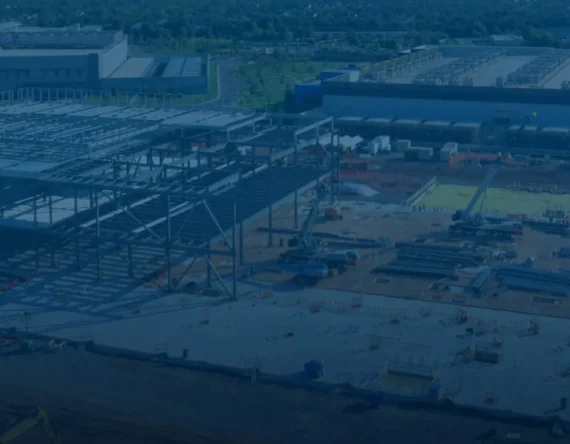




The data center sector is in the middle of an unprecedented construction cycle. Driven by demand for AI computing and cloud services infrastructure, hyperscalers and developers are building at a pace that strains every part of the project delivery chain, from available labor, equipment supply, and permitting timelines, to utility interconnection queues. The resulting facilities are larger, more complex, and more expensive than their predecessors, delivered under schedules that leave almost no room for error.
Data center projects have a particular talent for generating disputes, and for generating them fast. When a project goes sideways on a conventional commercial build, the consequences are serious. When it goes sideways on a 100-megawatt hyperscale campus with a hard lease commencement date, the financial exposure can be significant. Understanding why these disputes arise, and how they get resolved, is increasingly essential for anyone who builds, owns, finances, or operates these facilities.
Why These Projects Are Uniquely Dispute-Prone
Several structural features of data center construction create conditions that are unusually favorable to disputes.
The first is the speed imperative, given the direct relationship between delivery timing and revenue. This relationship is uniquely unforgiving of delays. A facility that misses its commissioning target is not merely late—it may forfeit a tenant lease, miss a critical market window, or trigger liquidated damages provisions that were priced into the contract precisely because the owner understands the stakes. That pressure cascades through every layer of the project, compressing review cycles, shortening procurement lead times, and eroding the administrative discipline that keeps scope boundaries clean.
Large campus projects are rarely built all at once. Phased delivery means each interim completion milestone depends on the last, often with live operations underway in completed sections while construction continues nearby. When a delay in one phase disrupts the sequencing of the next, and that next phase involves work in a partially commissioned, operationally sensitive environment, apportioning responsibility becomes extraordinarily difficult.
Procurement can also create tension. The critical mechanical and electrical equipment at the heart of a data center—transformers, switchgear, generators, precision cooling units—carry long lead times and limited supplier options. When deliveries slip, schedule impacts follow. In both cases, the question of who absorbs the cost is rarely answered cleanly in the contract.
Underlying all of these factors is a single thread: ambiguity. Ambiguity about scope, sequencing, and responsibility. In data center construction, where project values routinely reach hundreds of millions, or even billions, of dollars, ambiguity is where claims are born.
How Disputes Develop
Data center disputes rarely result from a single misstep. They accumulate. A change notice goes unacknowledged. A schedule revision is disputed. An owner directive is issued verbally but never reduced to a formal change order. What begins as a field-level disagreement compounds as each unresolved issue adds weight to the next.
The contract delivery structure shapes both the nature and magnitude of that exposure. Under a lump sum contract, the contractor has priced against a defined scope—but data center scopes evolve. Tenant requirements change. Design development uncovers coordination problems. The tighter the contract sum, the greater the pressure on assumptions, exclusions, and contingency usage, all of which become focal points when claims are submitted. Under a guaranteed maximum price (GMP) structure, the owner’s exposure is capped, but the contractor bears cost management risk in an environment where market conditions can shift materially over a multi-year build.
The most common claim types—delay and disruption, acceleration, change order disagreements, unforeseen conditions, liquidated damages—are familiar to any construction professional. What makes them harder to resolve here is the scale, the speed, and the number of parties involved. General contractors manage liability across multiple tiers of subcontractors and suppliers. Pass-through claims introduce procedural complexity. And the financial stakes create strong incentives to fight rather than settle.
Following the Money
When a dispute reaches the point of formal claims, the central question is simple: how much did this cost, and who caused it? Answering that with sufficient rigor is the work of forensic cost analysis, and it is more challenging than it sounds.
The strongest positions belong to parties whose documentation clearly separates base contract work from changes, extras, and delay-related costs. Signed change orders, contemporaneous notices, meeting minutes, and written directives are the building blocks of a defensible claim. When those records are incomplete—when change orders go unsigned, when directives are issued verbally, when job cost records commingle base contract and extra work—the ability to recover legitimate costs is severely compromised. One of the most common reasons valid claims fail is not that the underlying facts are wrong, but that the documentation was not there to support them.
Schedule analysis is the analytical backbone of most significant claims. Critical Path Method (CPM)-based delay forensics identifies the causal chain between specific events and schedule outcomes, quantifies delay durations, and apportions responsibility. Productivity loss analysis—using measured-mile and earned value methods—provides additional support where disruption, not pure delay, is at issue. Data center projects add a layer of sector-specific complexity: quantifying the impact of delayed power delivery, failed commissioning sequences, or mid-project infrastructure constraints requires deep familiarity with how these facilities are actually built and brought online.
The Case for Early Intervention
For large-scale data center disputes, arbitration has become the dominant forum, offering confidentiality, technical expertise, and relative speed. Dispute resolution boards have gained traction on complex campus projects, providing a standing panel that addresses issues in real time rather than allowing them to accumulate. But the most important intervention is earlier than any of that: engaging forensic and claims expertise while the project is still underway.
Project teams that bring in construction dispute specialists before positions harden are far better positioned than those who wait until a formal claim is filed. Early engagement enables proactive documentation of cost and schedule impacts, surfaces risks before they escalate, and often resolves issues before they become disputes at all. That outcome can preserve relationships, reduce legal spend, and keep projects moving.
The data center sector’s extraordinary pace creates a temptation to treat contract structure and documentation discipline as administrative overhead. That temptation is expensive. The projects that navigate this environment with the least dispute exposure share a common characteristic: they build accountability in from the start. In a sector where every decision is driven by speed to market, disciplined contractual and financial accountability is not a constraint on velocity—it is what makes velocity sustainable.
If you have any questions or would like to discuss how StoneTurn can help, reach out to Jon Critelli.
This article originally appeared in Data Center Dynamics, June 2026.
To receive StoneTurn Insights, sign up for our newsletter.
Disclaimer: The views expressed in this article are those of the author and do not necessarily reflect the views of StoneTurn Group, LLP, Province, LLC, or their affiliates. This article is provided for informational purposes only and does not constitute legal, financial, or other professional advice.